Entropy, in physics, is a measure of a system’s disorder and the amount of energy unavailable to do work. According to the Second Law of Thermodynamics, isolated systems naturally evolve toward higher entropy: energy spreads out, and order decreases over time. Entropy quantifies this energy dispersal, providing a mathematical way to distinguish processes that are possible from those that are not.
The change in entropy (ΔS) is calculated from this formula: ΔS= Qrev / T
Qrev = reversible heat added T= temperature
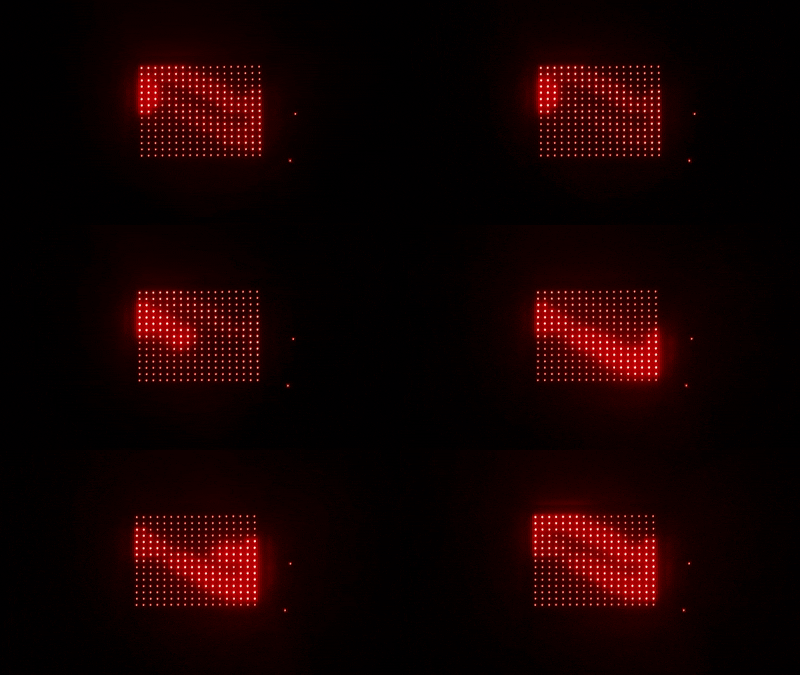
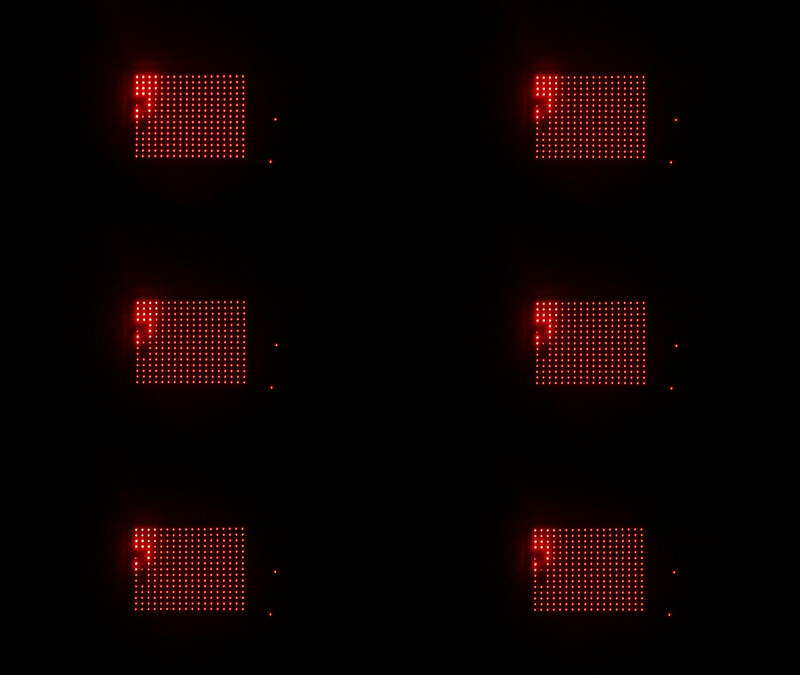
In the context of Heat Mapping Entropy: